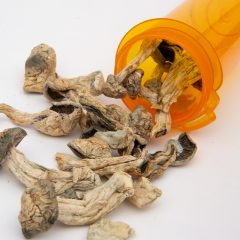
I am a researcher and writer interested in the future of psychedelics: where are we headed, and how is our trajectory driven by political, ethical, and narrative factors?
I’m based at Johns Hopkins University, where I’m currently a postdoctoral research fellow at the Center for Psychedelic and Consciousness Research. While my PhD focused on ethical dimensions of psychedelic therapies, I currently split my focus between empirical and ethical questions.


Posts of Interest

Ethics Corner – The Psychedelic Practitioner
From December 2025 I’m contributing a column on psychedelic ethics to Psychedelic Alpha’s “The Psychedelic Practitioner”. Writing with my friend and colleague Dr Bryony Insua-Summerhays, it’s more about offering practitioners opportunity to sit with a question, thought, or koan, than it is about providing hot takes.
Visions of Psychedelics
Arts/Engagement
In collaboration with photographer Adam Isfendiyar, in Nov-Dec 2024 we launched a photography exhibition Visions of Psychedelics in Oxford, which paired portraits of psychedelic trial participants with excerpts from their conversations to communicate their experiences through treatment. Much gratitude to participants for opening up sometimes vulnerable, deeply personal aspects of their journey to the world. A brief overview of the project is available at the Department of Psychiatry website.


The HOPE Consensus Statement
In August 2023 Brian Earp, David Yaden and I convened a multidisciplinary group of scholars for a workshop in the Ethics of Psychedelics. Over the following months, we collaborated to develop a Consensus Statement to highlight both the central and underappreciated risks, and potential benefits, of psychedelics. The statement is now published in The American Journal of Bioethics, and hosted (in six languages!) at HOPE-statement.com
The UK Public Support Psilocybin Rescheduling
(DrugScience)
UK Drug Policy
With support from DrugScience, in May 2021 I commissioned a YouGov poll to determine the British public’s attitudes to psilocybin reform, the results of which are available on the DrugScience website. Spoiler alert: every demographic is in favour. I also wrote a brief op-ed about the significance of the results for VolteFace.

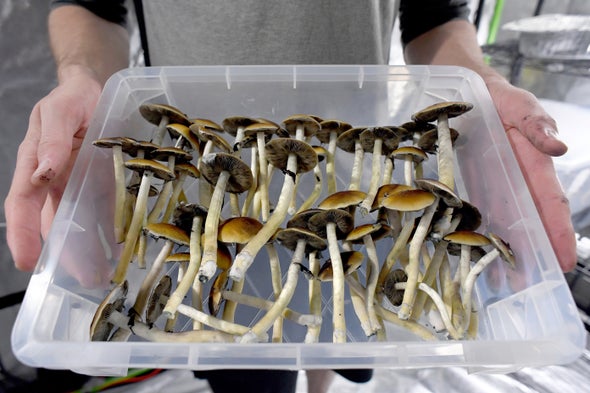
What if a Pill Can Change Your Politics or Religious Beliefs? (Scientific American)
Psychedelic Medicine
“But how many ultimately benefit from it will be a matter not just of how well it works, but also the narrative surrounding it when it arrives: does psilocybin underline how we are different, or how we are the same?”
Matt Johnson & David Yaden at JHU wrote a worthwhile counterpoint here. It’s a welcome corrective to some of the piece’s central sin: I spend too little time underlining that the narrative surrounding psychedelic value change could have political consequences, and not enough casting doubt on the level of evidence for value change. There’ll likely be more writing from me on this subject as my PhD progresses.
Psilocybin & OCD: Can psychedelics treat obsessive compulsive disorder? (Rich Haridy, New Atlas)
Psychedelic Medicine
An accessible write-up of my review in the Journal of Psychedelic Studies on the potential to treat OCD with psilocybin. There are now several studies underway exploring this possibility.
The Bioethics of Psychedelic Psychotherapy
(MAPS Canada)
Psychedelic Bioethics
In this interview with MAPS Canada I lay out in broad strokes what the motivation and rationale for my research are.

Psilocybin the Vanguard (VolteFace)
UK Drug Policy
It doesn’t matter if a drug policy saves lives, saves money, or has a stack of supporting evidence a mile high, because the current political zeitgeist makes this area of legislation primarily a battleground for clashes of values: personal responsibility and desert, vice, law and order, the direction of limited state funds, etc etc.
If reformers want to change that zeitgeist, and build a cultural norm of evidence-responsive drug policy in Westminster, the central planks must be changes which skirt around these clashes of values. Simply put, they need to be changes which mainstream politicians would be unafraid to explain and defend on The Today Programme or The Andrew Neil Show.
Psilocybin rescheduling is, I think, just that kind of change.
Medicinal cannabis: why punish patients for regulatory failure? (1828)
UK Drug Policy
The US criminalises patients who import drugs they are unable to afford domestically. I find this problematic: for the state to coerce patients away from a legitimate treatment disrespects their autonomy as much as coercing them into one.
Despite the recent legitimisation of medicinal cannabis in the UK, regulatory failures have meant that pitifully few NHS prescriptions have been filled, even where patients have the backing of senior clinicians.
The NHS is not under an obligation to provide any medicine, at any price, to any patient. But when patients jump through all the hoops, get the backing of specialists, and are still denied access, it is an overreach of state power to criminalise them for acquiring medicine elsewhere.
Here I make an argument for the limited decriminalisation of personal cultivation for medical use, and suggest two ways this can be accommodated with minimal legislative burden.

A trip beyond fear: psychedelics and the end of life (openDemocracy)
Psychedelic Medicine
To civilise death is one of the great challenges of the age. Psilocybin can help.
[Co-written piece with some very knowledgeable types]
Why block the promise of a psychedelic renaissance?(openDemocracy)
UK Drug Policy
Not only would rescheduling psilocybin be the single most positive influence on British science that a Home Secretary could hope to have, it is a much-needed move in response to a mental health crisis subject to much discourse but very little action.
Full disclosure: I didn’t pick the image, which has precisely 0 resemblance to psilocybin mushrooms.
 Psychedelic Ethics